


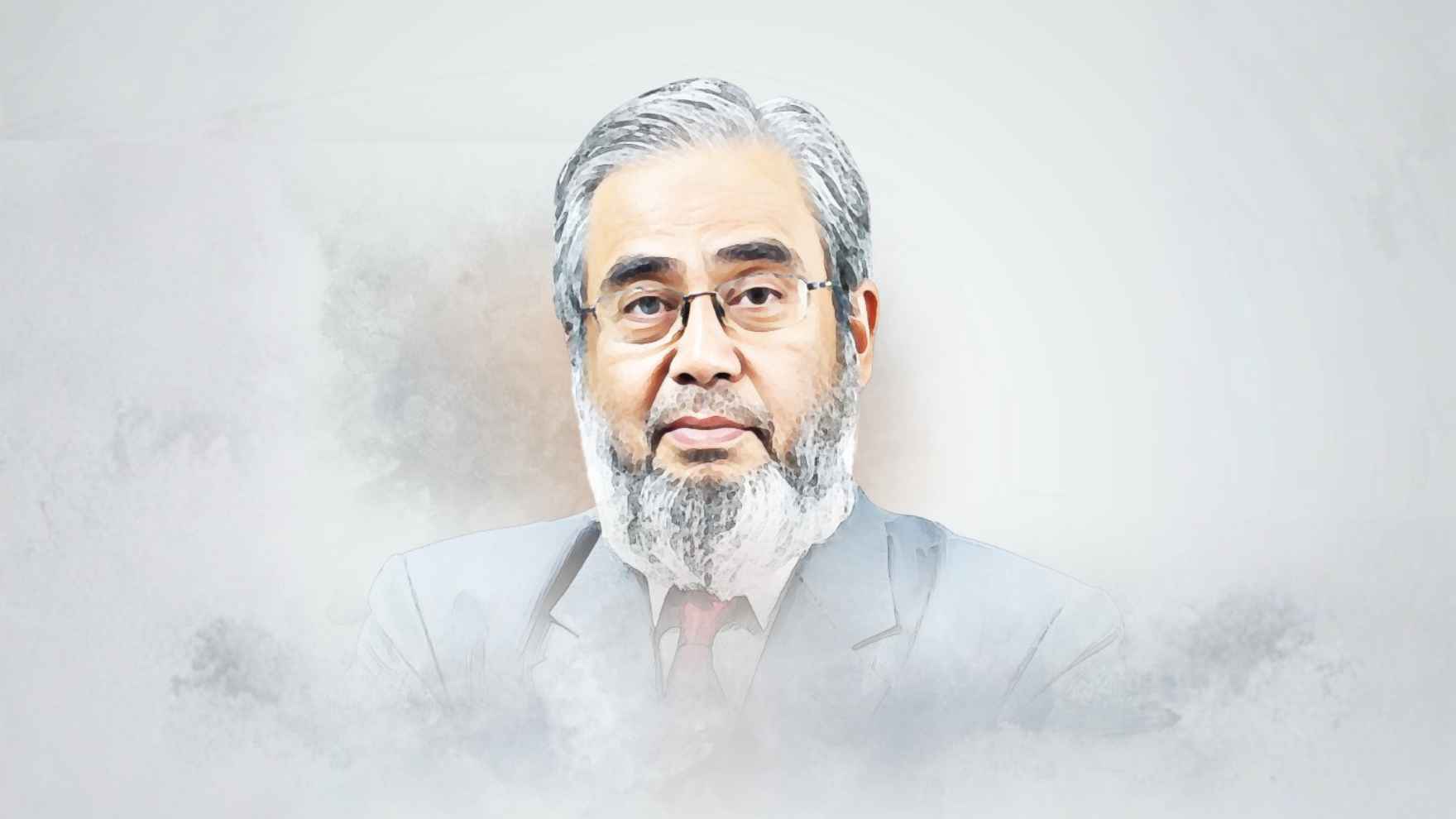
Prof. Dr. M. Shamim Z. Bosunia completed B.Sc. in Civil Engineering in 1965 from the then East Pakistan University of Engineering and Technology (EPUET), now known as Bangladesh University of Engineering and Technology (BUET). Remarkably, even today, every Friday, you will find him at BUET— going there in the morning for Jummah Prayers. After Jummah Prayer he goes back to Gulshan residence for lunch and then in the afternoon around 4:30 he rushes to BUET once again to spend the evening in the club there.
He enjoys spending time, engaging in club activities and lively discussions with BUET teachers and his class mates; four of his class mates who also assemble there. The lively ‘Friday Adda’ at BUET every week has been his greatest joy.
The Shaping Bangladesh Magazine had the privilege of sitting down with Prof. Dr. Bosunia, the prominent Bangladeshi academician, a living legend in civil engineering, researcher, and leader, for an in-depth Q&A to learn about his journey, philosophies, and reflections on teaching, engineering, and national development.
After graduation, you earned M.Sc. in 1972 and went on to complete a Ph.D. at the University of Strathclyde, UK in 1979. We are curious to know who or what inspired you to pursue a career in civil engineering? Was it a childhood dream?
I’m not sure exactly when the idea first took root, but I often recall an incident from around 1959–1960. At that time, my father was serving as a Magistrate in Barishal. We had an Executive Engineer of Govt’s Irrigation department living opposite to our house. His name was ‘Baaro Bhuiyan’. I remember being fascinated that he had an official car, while my father did not, despite his position.
As a young boy, I was intrigued by this contrast and asked my father one day about it. He replied quite simply, “Engineers are provided full time official cars – you should consider becoming one.” That brief but impactful remark stayed with me over the years.
In many ways, it planted the seed that eventually led me to pursue a career in engineering, and ultimately to civil engineering.
Can you tell us about your early days as a student at BUET? How was student life like back then?
I enrolled at Ahsanullah Engineering College, which is now known as BUET in 1961 and completed my B.Sc. in Civil Engineering in 1965. Student life back then was very different from today. There was no co-education; female students joined much later. I remember it started with just three girls in 1964, and all three did very well in their degrees, two in civil and one in chemical engineering graduating in 1968.
Today, the number of female students has grown to around 20–22 percent. I believe that with more support, especially better hall facilities, this number will continue to rise very sharply.
Life as a student was simple and modest. We got by on very little – breakfast would cost about 12 annas (former currency), equivalent to 75 to 80 paisa (present) and a trip to New Market by rickshaw just 4 annas (25 paisa). For leisure, we would go out to watch movies, cricket or football matches, as there was no television at the time.
Academics were also different. Private tuition, which is so common now, wasn’t something practiced in our time. I never needed private tutors- we relied mostly on lectures and group-study.
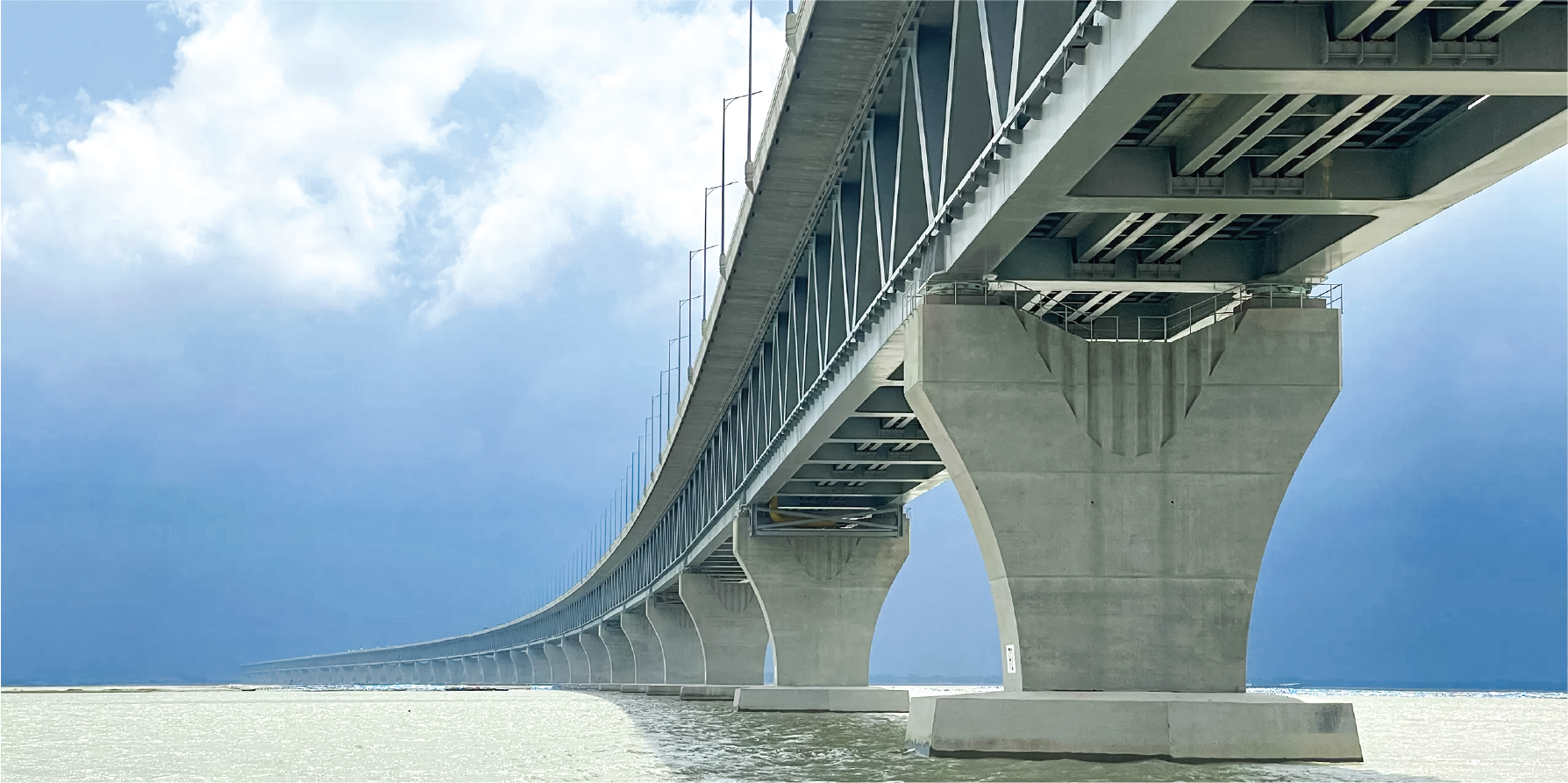
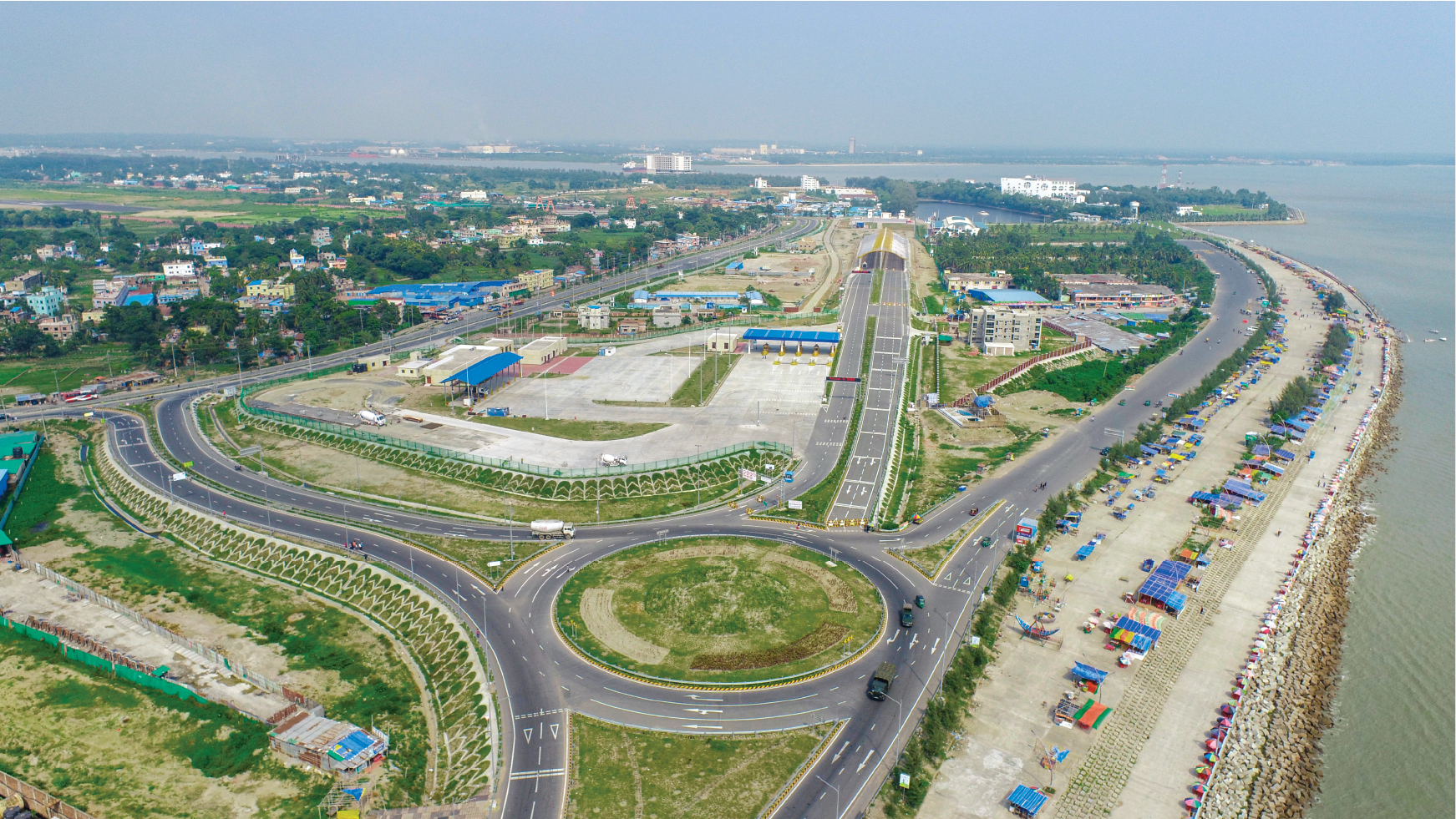
You’ve been involved in major infrastructure projects like the Padma Multipurpose Bridge and the Karnaphuli Tunnel. Tell us about the experiences of working on these landmark projects?
I have had the privilege of serving as the Chairman of the Panel of Experts for both of the country’s most significant infrastructure projects.
As Chair, I led the panel responsible for providing technical guidance, ensuring quality control, and resolving complex design issues, including challenges related to the railway viaduct. My focus remained on structural safety, concrete quality, and the long-term durability. We also ensured that the steel truss structure of the bridge last over 100 years.
Currently, I am also serving as the Chairman of the Panel of Experts for the Dhaka–Ashulia Elevated Expressway, which spans around 24 kilometers, and the Dhaka East-West Elevated Expressway, an approximately 39-kilometer project designed to connect (Dhaka–Aricha) road with (Dhaka–Chattogram) highway.
In addition, I am leading a project involving an underpass tunnel from Hajj Camp to the Airport terminals about 1.2 km long planned at a depth of about 20 feet below road level, which is now under construction.
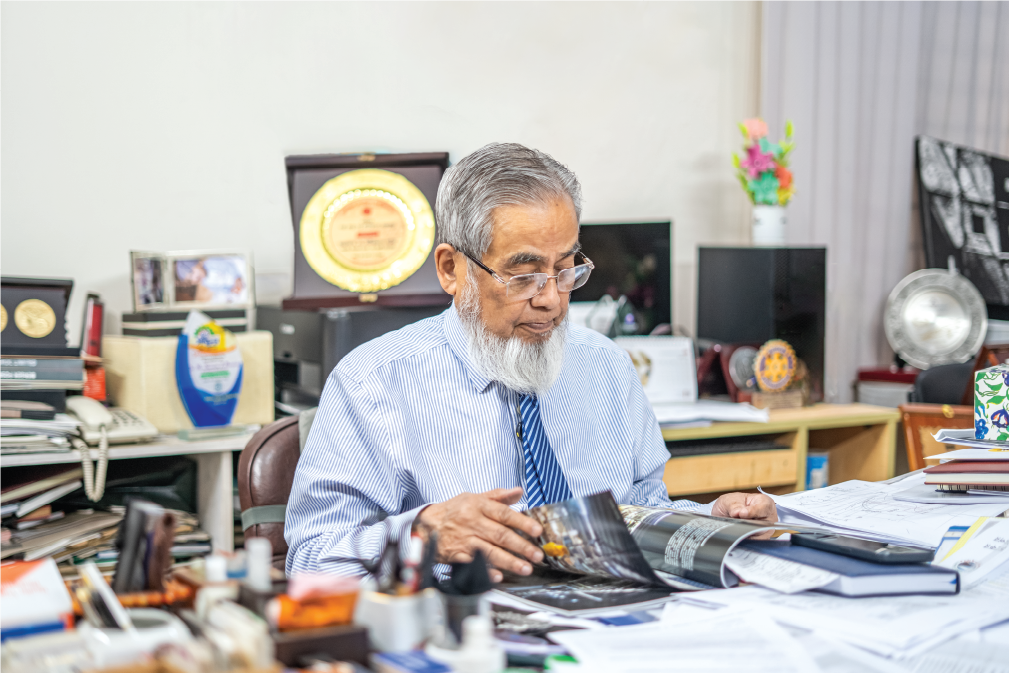
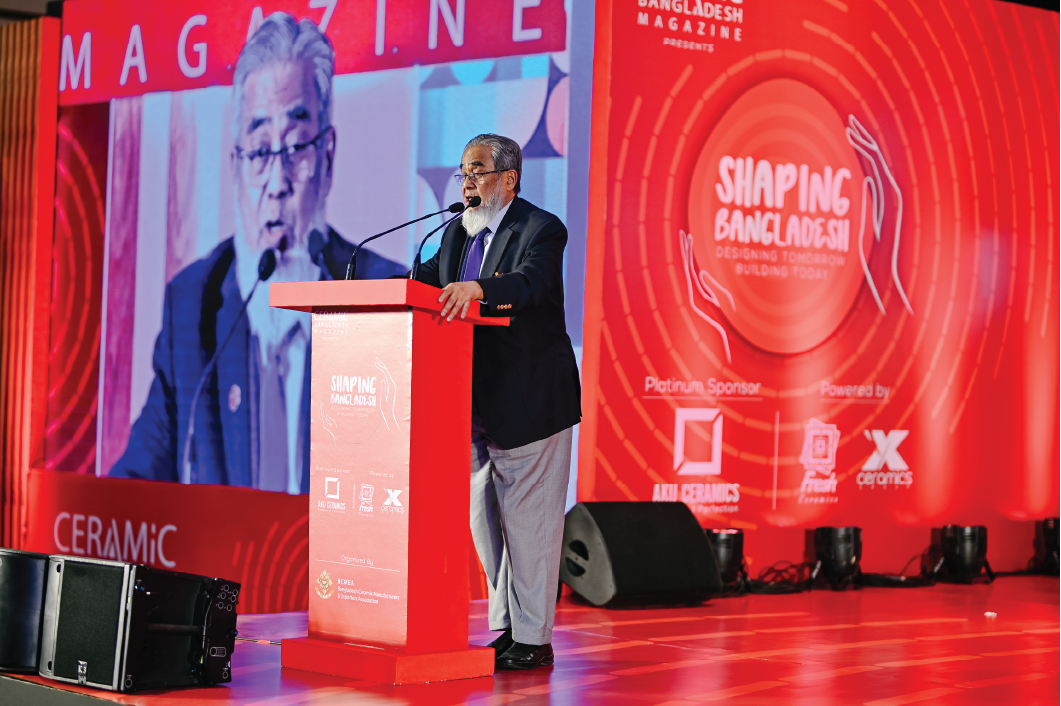
With years of experience as an educator, how would you describe your teaching philosophy and approach? what do you aim to pass on to your students?
Being a teacher of civil engineering has been the greatest achievement of my life—nothing surpasses it. I joined BUET as a lecturer, became a Professor of Civil Engineering in 1981, and continued there until my retirement in January 2009. Even after retirement from BUET, I continued teaching Civil Engineering and Architecture student in Asia Pacific University (UAP), till today I am teaching there.
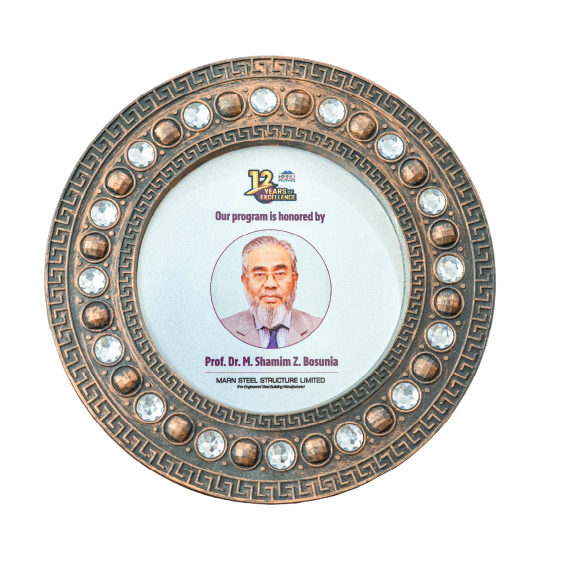
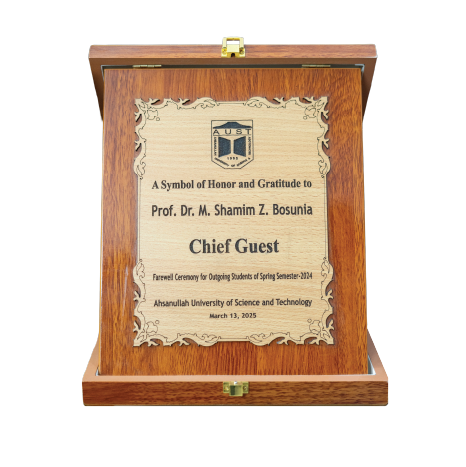
National Prof. Dr. J.R. Choudhury the then VC of UAP offered me the post of Emeritus Professor. I joined in 2017 with the condition that I will not be salaried. UAP accepted my proposal and I am serving as Emeritus Professor at the University of Asia Pacific (UAP) in Dhaka till today and taking classes in every terms.
My philosophy is quite simple. I always tell my students that there is no alternative to education – there are no shortcuts to learning. I encourage them to respect their teachers and truly listen to what they have to offer. I preached all my life that teachers and students are not opponent of each other, rather they are guides and friends.
Beyond academics, I emphasize values. Students should respect their parents and, importantly, respect women. After all, every individual is born from a mother, and without respect for women, no society can truly progress or evolve.
What advice would you give to students to help them succeed in their careers?
My advice to students is simple: understand what you study. Don’t just memorize.
I often see graduates – architects or engineers – moving into completely different professions, such as banking or unrelated fields. When that happens, one has to ask: what is the purpose of studying a discipline if it is not carried forward into practice? Universities should not just produce graduates; they should help shape professionals.
Young minds are the future, and if they are not contributing meaningfully to their professional domains, it is a missed opportunity for the nation.
Looking back on your journey, what are the most valuable life lessons have you learned?
Looking back, one of the most valuable lessons I’ve learned is not to be greedy. Beyond my residential apartment in Gulshan, I don’t own any other property – and neither did my father or uncle who was a very renowned doctor. I’ve always been content with what I have. This sense of contentment has been a guiding principle for me throughout my life.
One last question is: do you have any regrets in life? And what is it that still keep you going every day?
No, I have no regrets in life. My deepest wish is to keep teaching until my last day. My father once told me, “Who is brave enough, who speaks loud and who is confident, and whose results are worth for becoming teachers – he can be a good teacher.” I am simply following his words.
Just one degree from BUET gave me everything I am today. The rest has been my own effort and dedication.