


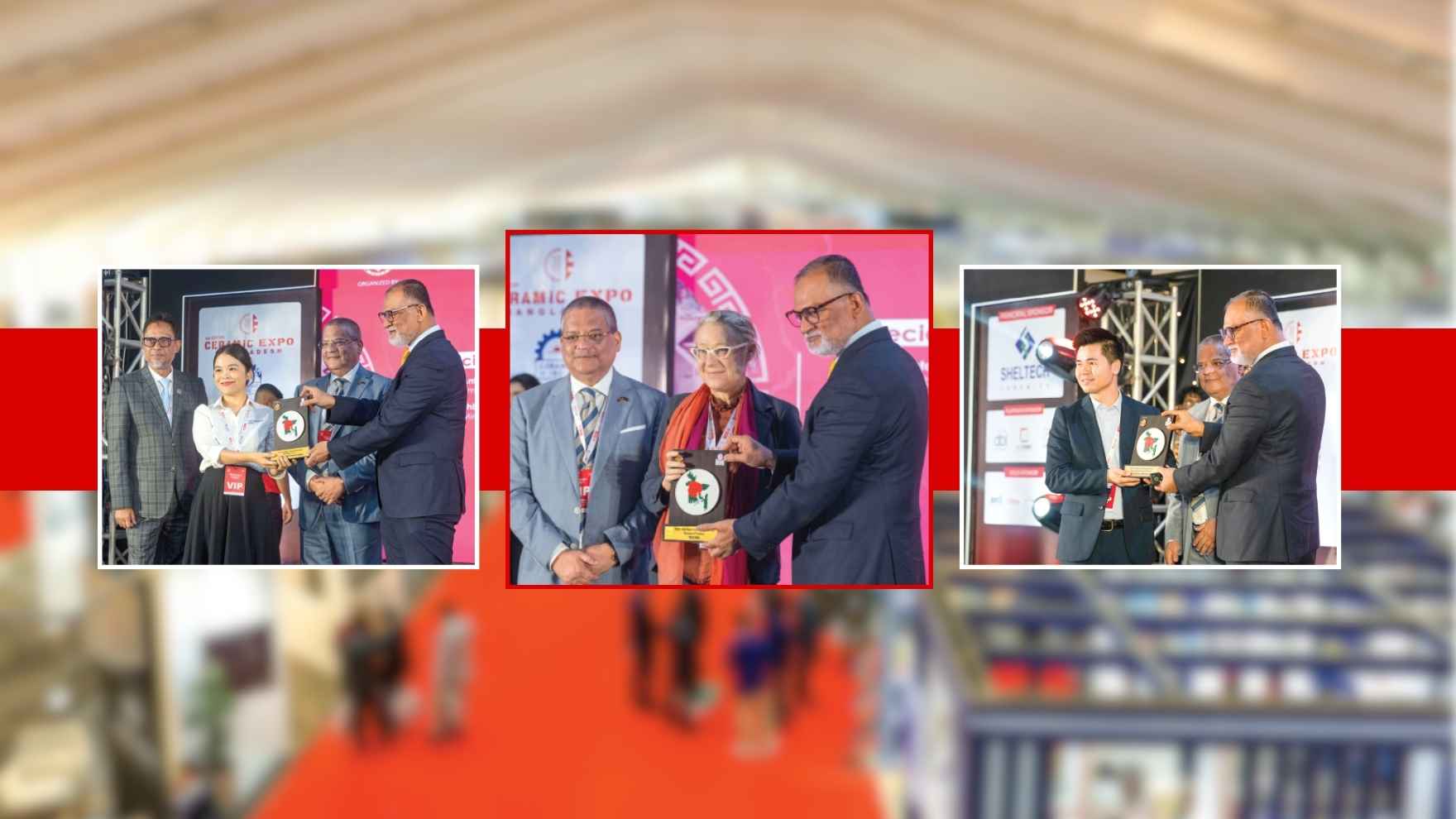
International organisers from China and Southeast Asia presented a unified message on the growing importance of collaboration at Ceramic Expo Bangladesh 2025, pointing to shared goals, practical gains, and the need for stronger partnerships within the global ceramic industry.
Across conversations with organisers from Foshan Uniceramics Expo, Keramika of Indonesia, Ceramics China, and two global expos—Tecna of Italy and ASEAN Ceramics—a common thread emerged: the belief that Bangladesh is becoming an increasingly important meeting point for manufacturers, suppliers, and technology providers.
Their participation as supporting partners reflected not only individual institutional interests but also a broader alignment around industry development and cross-border cooperation.
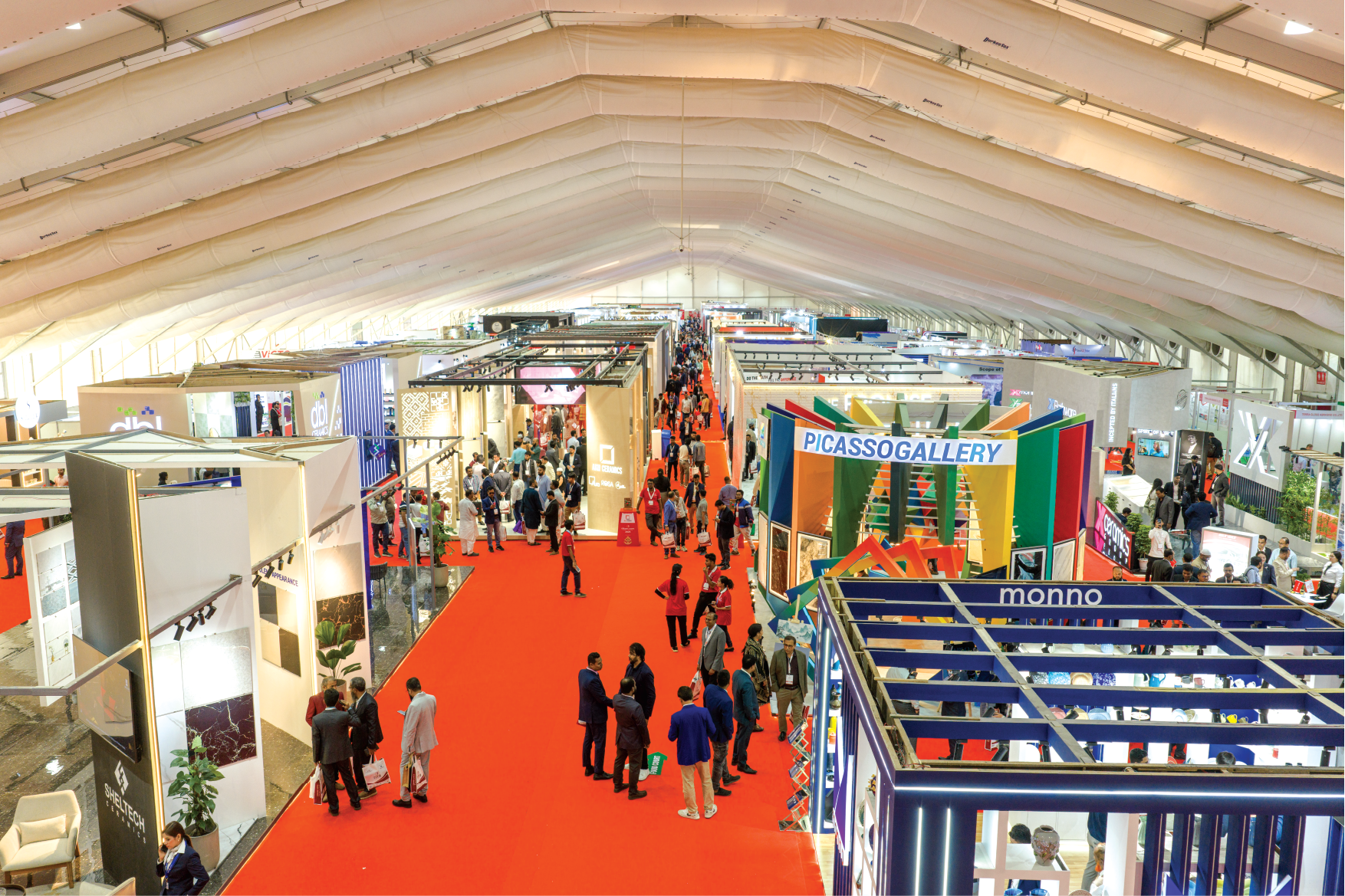
“Every global exhibition partner matters to us, as the BCMEA is determined to seize every opportunity for Bangladeshi ceramic manufacturers to expand their trade and reach,” said Irfan Uddin, chairman of the Ceramic Expo Bangladesh organising committee.
“At present, we have around 15 international partners, and the association is actively building new links across global value chains — from tiles and sanitaryware to machinery and advanced materials to tableware and bricks,” said Irfan Uddin, who is also the general secretary of BCMEA.
“For Bangladeshi ceramic producers, Foshan Uniceramics, Keramika, and Ceramics China have long played vital matchmaking roles, while Tecna and ASEAN Ceramics have ensured our companies gain access to cutting‑edge technologies and technical expertise essential for future growth.”
GLOBAL PARTNERS
For Foshan Uniceramics Expo, the decision to engage was closely tied to the perceived potential of the local market. “We saw great promise in Bangladesh’s ceramic market and wanted to help strengthen connections between the two countries,” said Li Xinliang, general manager of Foshan Uniceramics Expo. He noted that sharing experience in exhibition organisation formed an equally important part of their involvement.
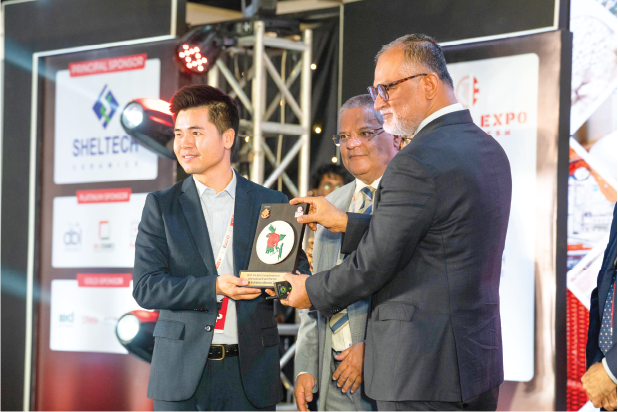
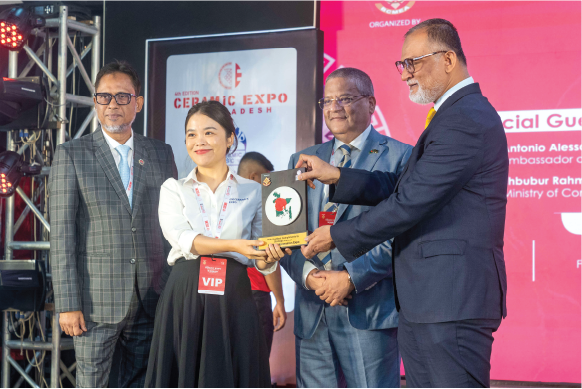
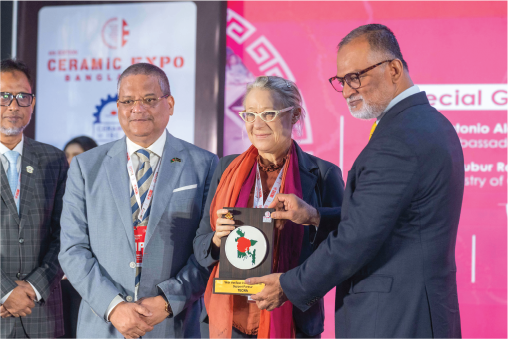
That sense of alignment was echoed by Keramika, which framed its participation through a shared vision. “Ceramic Expo Bangladesh shares a similar vision with us—to advance local industries and connect global suppliers with manufacturers,” said Desi Lestari, project manager of Keramika, describing how this common purpose created a natural basis for collaboration.
The emphasis on connecting different parts of the value chain reinforced the idea that exhibitions are no longer just platforms for display, but spaces for building sustained relationships.
Tecna sees BCMEA’s Ceramic Expo as a strong impulse for the ceramics industry worldwide, said Marco Cecchini, industrial division group exhibition manager at Italian exhibition group Tecna. “Ceramic Expo Bangladesh 2025 has been a breakthrough edition which has consolidated the identity of ceramics manufacturing from Bangladesh.”
Participation in the expo translated these shared intentions into tangible outcomes. Representatives from Foshan Uniceramics Expo described how the event created opportunities to engage directly with industry stakeholders. “We connected with leading manufacturers and gained a clearer understanding of local market needs,” said Li Xinliang, pointing to the value of on-the-ground interaction. These exchanges also opened discussions with peers and created pathways for potential collaboration.
Keramika’s experience reflected a similar dynamic, but with a focus on outreach and visibility. “We were able to introduce our exhibition to industries in Bangladesh and India and promote stronger, mutually beneficial cooperation,” noted Desi Lestari.
As one of the leading exhibitions in the ASEAN region, ASEAN Ceramics has always focused on connecting industry leaders, manufacturers, and solution providers to foster sustainable growth and global competitiveness, said Paul Russell, publishing director at Asian Ceramics Magazine.
By positioning their own event within the regional ecosystem, they extended their network while contributing to a wider exchange of ideas and opportunities.
For ASEAN Ceramics, the emphasis was on the depth of engagement and the quality of participation. “We helped bring meaningful Chinese representation, facilitating business connections and demonstrating the strength of cross-border cooperation,” said Russell. He described the partnership as one built on “clarity, exclusivity, and mutual commitment,” suggesting that well-defined expectations played a role in ensuring productive outcomes.
Ceramics China approached the partnership with a similar perspective, focusing on the principles underpinning cooperation. “Our motivation was to build a mutually beneficial bridge between the two countries and promote stronger international cooperation,” explained Ms Jasmine, marketing executive of Ceramics China. She added that this approach was grounded in “consistency, transparency, and a long-term perspective,” highlighting the importance of trust in maintaining such partnerships.
Despite differences in emphasis, every organiser pointed to the role of the expo as a platform for connection. The ability to bring together manufacturers, suppliers, and organisers in one space allowed for a level of interaction that extended beyond formal agreements. Conversations, introductions, and shared experiences contributed to a sense of momentum within the industry.

At the same time, reflections on the event also included observations on how collaboration could be strengthened further. ASEAN Ceramics highlighted the importance of clearer communication and alignment with international partners.
“Stronger communication and alignment with international partners” would help ensure smoother collaboration, Ms Jasmine of Ceramics China said, while also calling for more coordinated promotional efforts to enhance visibility for all stakeholders.
She stressed the need to maintain a stable and trusted partnership framework, describing it as essential for sustaining cooperation over time. The focus on structure and clarity complemented the broader emphasis on relationship-building seen across all three organisations.
Keramika, while offering fewer critiques, focused on learning and exchange. “This exhibition is already very well organised,” said Desi Lestari, adding that there was much to learn from the Bangladeshi organisers. Her remarks suggested that collaboration was not only about sharing expertise but also about observing and adapting successful practices.
From the perspective of Foshan Uniceramics Expo, the conversation returned to the importance of deeper engagement across borders. Li Xinliang pointed to initiatives such as joint pavilions, exhibitor matchmaking programmes, and knowledge-sharing sessions as ways to bring partners closer together within the same platform. These ideas reflected a practical approach to strengthening connections already established during the event.
Alongside these suggestions, there was a shared recognition of the broader priorities shaping the industry. Innovation, sustainability, and technology transfer were highlighted as key areas that could support long-term development, linking local growth with global standards.
Taken together, the perspectives of the three organisers form a consistent narrative. Each entered the partnership with its own focus, yet all pointed to the same underlying reality: collaboration, when built on shared goals and clear communication, can create meaningful opportunities for the ceramic sector.
Their experiences at Ceramic Expo Bangladesh 2025 illustrate how international partnerships are evolving—not as isolated engagements but as interconnected efforts shaped by mutual interest, practical exchange, and a growing sense of regional and global integration.