


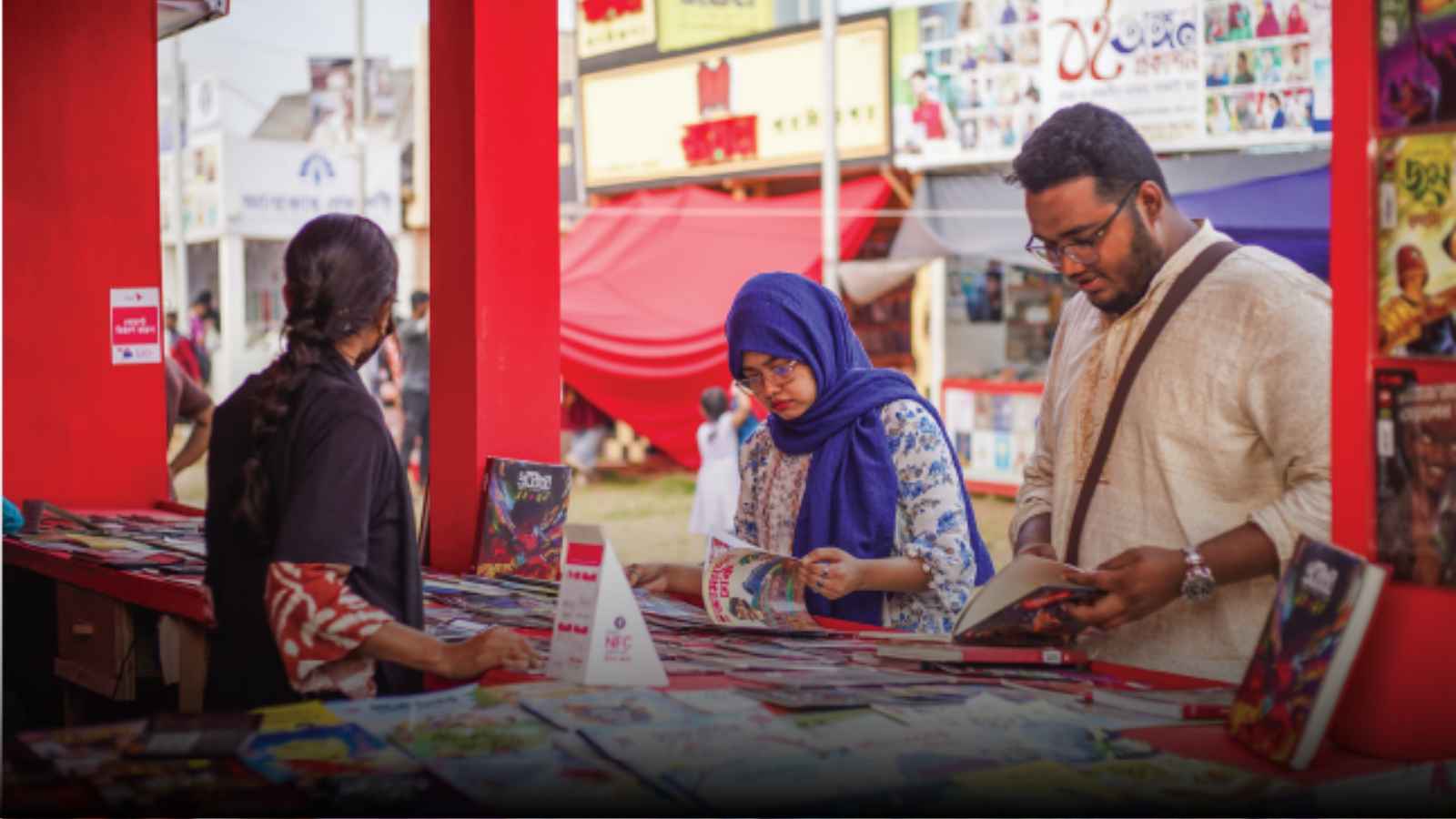
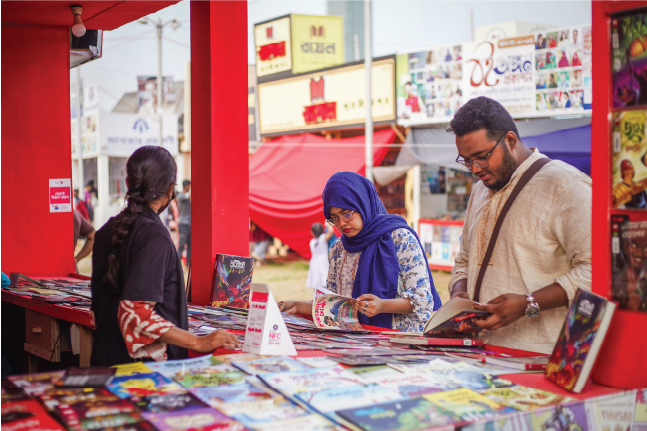
Every February, Dhaka’s air shifts with the rhythm of books. Paths fill with the scent of new pages, conversations drift from stall to stall, and readers move with quiet excitement.
The Amar Ekushey Book Fair becomes more than a marketplace—it turns into a living landscape of words, memories, and imagination.
At the heart of the fair lies a quiet tribute to the spirit of the Language Movement of 1952, a reminder that language and literature are deeply woven into the identity of Bangladesh.
The fair stands as a celebration of that legacy, where writers, readers, and publishers come together to keep the journey of words alive year after year.
On February 21, 1952, some valiant sons of the then East Pakistan (present-day Bangladesh) sacrificed their lives to establish Bangla as the state language.
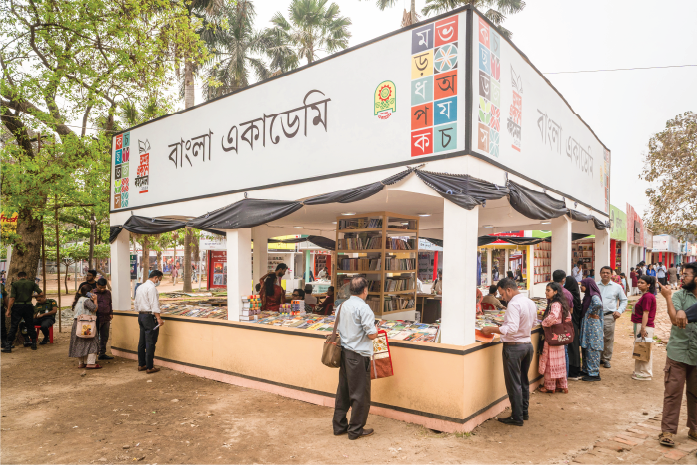
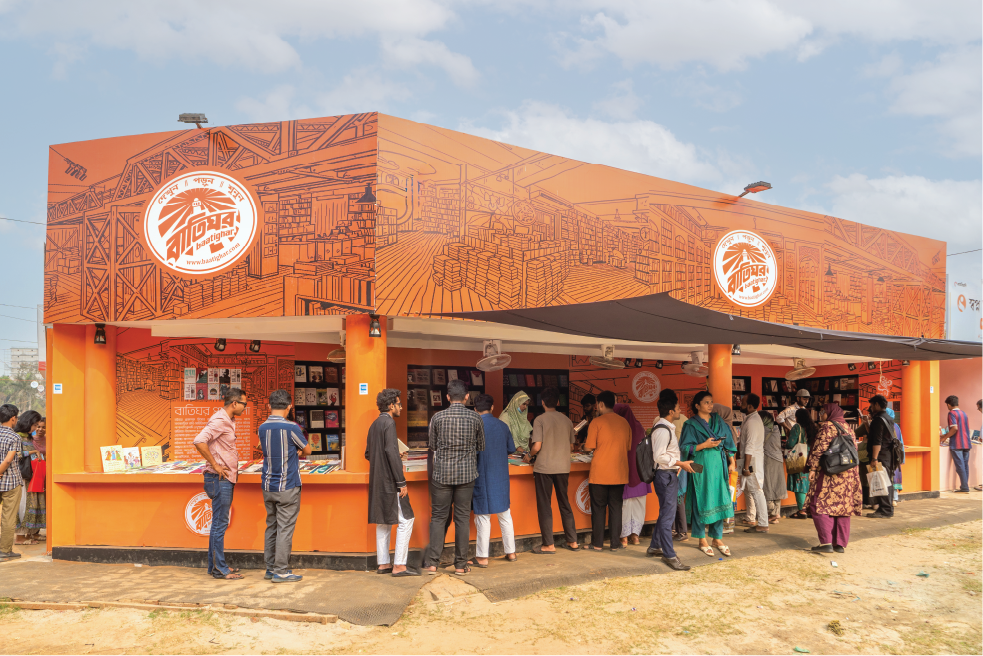
In remembrance of their sacrifice, Bangla Academy organizes the Amar Ekushey Book Fair annually in February, which is one of the largest book fairs in South Asia.
Traditionally, the Ekushey Book Fair begins on February 1 and continues throughout the month. This year, however, the schedule was disrupted by the national election in mid-February. As a result, the fair started on February 26, later than usual, and continued until March 15, making this edition the shortest in its half-century history.
Around 549 publishing houses are participating in this year’s fair, with 1,018 stalls set up across the venue.
Monirul Islam, a resident of Uttara, said: “I visit the Amar Ekushey Book Fair almost every year, and it always feels special. The environment is lively yet deeply tied to our love for books. I bought a few new titles.”
He added, “For readers like us, the fair is more than buying books—it’s where we connect with literature, ideas, and the spirit of our language.”
Kaosar Ahammad, deputy manager of Prothoma Prokashan, said: “The book fair is not just a fair; it is something much greater. Publishers wait all year for this month, and preparations continue throughout the year.”
He noted that the fair is not merely about selling books; it is a unique union of readers and publishers. Sales at the 2026 fair, however, are currently one-fifth of those in 2025.
Still, considering Ramadan and Eid-ul-Fitr, sales are better than expected, with non-fiction performing strongly. So far, 40 new books have been published, mostly on politics, economics, the Liberation War, and nonfiction.
Md Shamim Hossain, head of sales at Pathak Shamabesh, said: “Given the current circumstances, it would not be fair to compare this year’s sales with previous years. Sales are down by over 50 percent compared to normal times, but better than expected.”
Normally, Friday sales would reach Tk 2-3 lakh, but now they stand at Tk 20,000-30,000. Pathak Shamabesh plans to publish 60 new books this year, with higher demand for nonfiction and lower demand for political titles.
AKM Kamruzzaman, senior assistant manager for sales and distribution at University Press Limited, said demand for English nonfiction is rising. “There was a time when poetry was in high demand, and manuscripts were selected very carefully. Now, due to Ramadan, finding customers after Iftar has become nearly impossible. Daily sales have dropped by 80 percent compared to usual times.”
UPL has already published eight new books this year, with five more in the pipeline, mostly essays and economics.
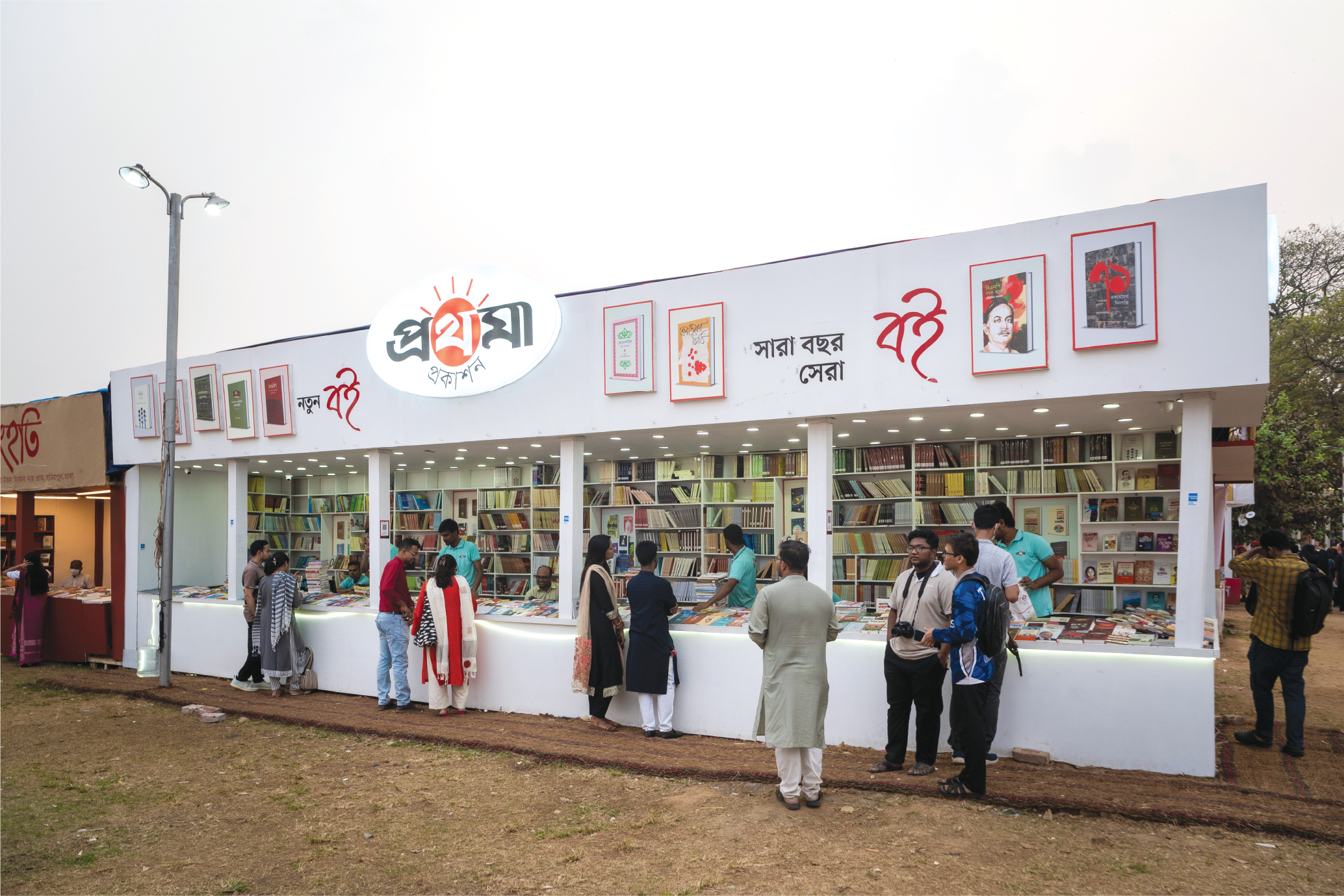
Selim Reza, member secretary of the fair’s organizing committee, said this year’s focus was on improving facilities and the overall experience.
“The grounds are very clean, with dedicated cleaners working day and night, and we’ve made the fair completely polythene-free. Our task force also monitors piracy to ensure a smooth event.”
Younger readers are increasingly drawn to digital formats, reducing the habit of buying physical books. Yet dedicated readers continue to attend, keeping sales steady despite perceptions of decline. Detective stories for children, Liberation War titles, and poetry remain especially popular.
Although this year’s fair was delayed, the crowds are lively, the atmosphere vibrant, and new authors gain valuable exposure through launches and programs that connect them directly with readers.
Reza pointed out that the book fair’s biggest challenge is funding. As the organizer, Bangla Academy depends heavily on sponsorships, and without them, management suffers. He proposed a direct government allocation of Tk 5 crore to ease the burden.
Photo: Farhan | Truphoto Studio